
The Hidden Goldmine in Your Factory: Turn Scrap Materials into a 15 – 40% Revenue Boost
Walk your factory floor. You see machinery, skilled teams, and…

Spend management is crucial for any organisation aiming to optimise its procurement processes. It involves controlling and managing company expenditures to enhance efficiency and cost-effectiveness.
Key performance indicators (KPIs) play a vital role in this process. They provide measurable values that help assess the effectiveness of spend management strategies.
By focusing on the right KPIs, businesses can achieve significant cost reductions and improve compliance. This leads to better financial performance and stronger supplier relationships.
Understanding and implementing these metrics can transform procurement operations. It allows for data-driven decisions that align with organisational goals.
Procurement professionals and financial managers must prioritise these KPIs. Doing so ensures improved cost control and enhanced compliance.
This guide will explore essential spend management KPIs. It will provide insights into optimising procurement processes for maximum efficiency.
Join us as we delve into the world of spend management metrics. Discover how they can drive value and innovation in your organisation.
This guide explains how targeted KPIs enable effective spend management by controlling costs, improving compliance, and strengthening supplier relationships through data-driven decisions. It details core metrics (e.g., total spend under management, maverick spend, cost reduction and TCO, contract compliance, process efficiency, supplier risk/performance, sustainability) and how to implement and track them. It also outlines best practices, common challenges (data quality, change resistance, KPI alignment), and emerging trends such as AI, real-time analytics, and green procurement. Applying these insights helps procurement boost efficiency, mitigate risk, and deliver measurable financial value.
Spend management is the strategic process of maximising the value of each pound spent. It supports budget control by providing visibility into spending patterns. Organisations can identify areas for cost reductions and efficiency improvements.
Effective spend management streamlines procurement, ensuring that all purchases align with strategic objectives. This process involves negotiating contracts, managing supplier relationships, and tracking expenditures.
The importance of spend management cannot be overstated. It helps organisations:
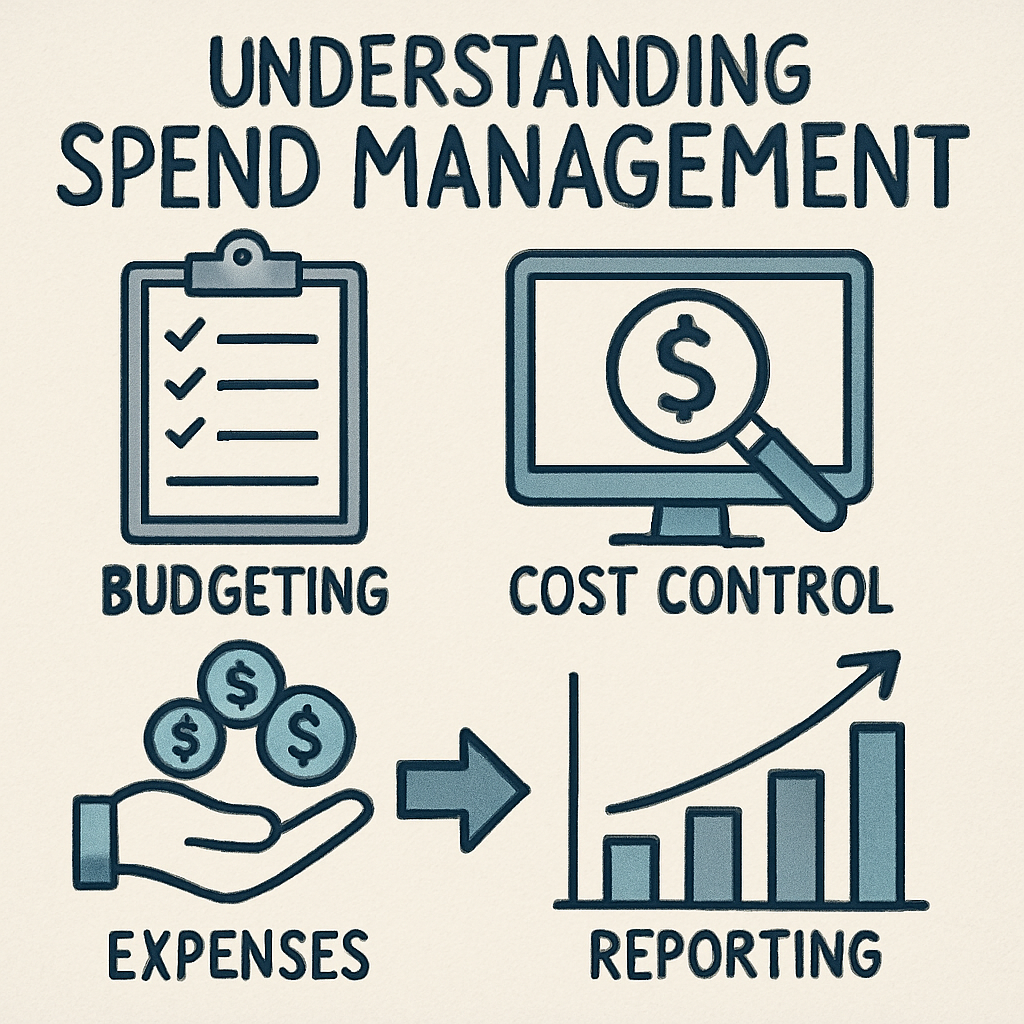
A well-implemented spend management strategy minimises risks associated with maverick spends. These are purchases made outside agreed terms, often leading to increased costs.
Additionally, when organisations focus on agreement compliance, they ensure better control over pricing and contracts. This focus results in significant savings and prevents unexpected financial hits.
In today’s competitive business environment, spend management is an indispensable component for sustaining financial health and operational efficiency. Embracing it leads to improved financial performance and strategic value creation.
Key Performance Indicators (KPIs) are vital in assessing and enhancing spend management. They offer a clear picture of procurement activities, aligning them with business goals.
KPIs in spend management identify areas needing improvement and support data-driven decisions.
They make it possible to track performance and adjust strategies as needed.
Common KPIs include:
By using these indicators, businesses can manage resources effectively, ensuring they spend wisely. KPIs empower decision-makers with insights into operational efficiency and financial performance.
Comprehensive use of KPIs leads to stronger supplier relationships. It allows for smoother negotiations, better compliance, and a clearer understanding of spend concentration risks. Embracing KPIs fosters an environment where continuous improvement is achievable, driving both immediate and long-term benefits.

Effective spend management relies on tracking key metrics. Understanding these can lead to better financial decisions.
Critical KPIs include:
Regularly monitoring these indicators ensures alignment with budget goals and strategic objectives.
Total spend under management measures the portion of an organisation’s spending actively overseen by the procurement team. This KPI reflects procurement’s influence over expenditures.
An increased percentage indicates improved procurement control and strategic influence. Organisations strive to maximise this metric to align spending with business objectives.
Calculation: Spend Under Management % = (Managed Spend / Total Company Spend) × 100
Key benefits of maximising this KPI include:

Monitoring this KPI ensures spending aligns with corporate strategies and objectives.
Maverick spending occurs when purchases are made outside approved contracts. These unapproved purchases can lead to increased costs and compliance issues.
By tracking maverick spending, organisations can identify and mitigate inefficiencies in procurement. Reducing this spending strengthens internal controls and compliance.
Calculation: Maverick Spend % = (Unauthorized Spend / Total Spend) × 100
Key strategies to manage maverick spending include:
Addressing maverick spending is crucial for maintaining budget discipline and ensuring streamlined operations.
Cost reduction is fundamental to procurement, focusing on achieving significant savings. This KPI evaluates efforts to decrease costs through strategic sourcing.
Savings can result from better negotiations, price avoidance, and supplier consolidation. Monitoring this metric ensures financial goals are met.
Calculation for Savings: Year-over-Year Savings % = (Previous Year Spend – Current Year Spend) / Previous Year Spend) × 100
Calculation for Cost Reduction: Cost Reduction = Historical Expenses – Current Expenses After Eliminations
Important aspects include:
A sustained focus on this KPI drives long-term financial health and operational success.
Price avoidance focuses on strategies to prevent cost increases before they occur. This approach centres around negotiation and proactive planning.
It involves avoiding potential price hikes through long-term contracts and market trend analysis. Employing this KPI can lead to reduced financial risk.
Calculation: Price Avoidance = Cost of Potential Damages/Replacements – Actual Costs Incurred
Strategies for price avoidance include:
Such strategies prevent cost escalations, supporting stable financial planning.
Purchase Price Variance (PPV) measures the difference between expected and actual purchase prices. This KPI helps identify deviations in purchase costs.
A high PPV signifies lack of pricing control or fluctuating supplier prices. Managing this variance is essential for accurate budgeting.
Key actions for managing PPV include:
Effective PPV monitoring enhances budget accuracy and financial forecasts.
Agreement pricing ensures purchases align with negotiated terms. Agreement compliance guarantees adherence to contractual obligations.
Failure to comply with agreements can lead to unexpected costs. Monitoring these metrics ensures financial and operational adherence to planned agreements.
Calculation: Contract Compliance % = (Compliant Purchases / Total Contract Purchases) × 100
Key elements include:
Effective oversight of these metrics prevents deviations and ensures cost predictability.
Contract Renewal Rate reflects how often contracts are renewed. This KPI helps assess supplier satisfaction and relationship strength.
Time to Contract measures the time it takes to finalise contracts, influencing procurement speed. Reducing time to contract improves procurement efficiency.
Calculation for Contract Renewal Rate: Renewal Rate % = (Renewed Contracts / Expiring Contracts) × 100
Calculation for Time to Contract: Average Days = Total Days from Selection to Signature / Number of Contracts
Considerations include:
Improving these metrics strengthens supplier relations and enhances procurement efficiency.
Purchase Order Accuracy Rate indicates the correctness of purchase orders. Errors can disrupt supply chains and lead to increased costs.
High accuracy in purchase orders fosters operational smoothness and cost savings. Regular audits help maintain order accuracy.
Calculation: PO Accuracy % = (Accurate POs / Total POs) × 100
Strategies to improve accuracy include:
Implementing robust order management systems
An accurate purchase order process enhances supply chain efficiency.
Invoice Processing Time affects cash flow and supplier relationships. Faster processing leads to timely payments and satisfied suppliers.
Monitoring and reducing processing time is crucial for maintaining healthy business relations. Automation can expedite the invoice approval cycle.
Calculation: Average Processing Days = Total Processing Days / Number of Invoices
Key steps to reduce processing time involve:
Quick processing enhances financial management and supplier trust.
On-Time Payment Rate reflects how often payments are made on schedule. This KPI influences supplier satisfaction and negotiation leverage.
Consistent on-time payments can lead to better supplier terms and discounts. It signifies strong financial and supplier management.
Calculation: On-Time Payment % = (Invoices Paid On Time / Total Invoices) × 100
Ways to maintain this rate include:
Ensuring timely payments supports strong supplier partnerships.
The Emergency Purchase Rate tracks unplanned purchases, often at higher costs. Frequent emergency buys can disrupt budgets and operations.
Lowering this rate ensures more stable and predictable spending. Planning and inventory management play roles in control.
Calculation: Emergency Purchase % = (Emergency Purchases / Total Purchases) × 100
Steps to reduce emergencies include:
Optimising this KPI brings financial stability and operational predictability.
Budget Variance measures the gap between planned and actual spend. Understanding this variance is essential for financial control.
Addressing budget variances helps in tightening financial oversight. It ensures alignment with strategic objectives.
Calculation for Budget Variance: Budget Variance % = ((Actual Spend – Budgeted Spend) / Budgeted Spend) × 100
Effective management strategies include:
Controlling budget variances ensures financial discipline and resource optimisation.
Total Cost of Ownership (TCO) assesses all costs related to a purchase beyond the initial price. It offers a complete cost view, aiding better decision-making.
Tracking TCO helps identify hidden costs impacting financial outcomes. It encourages holistic evaluation of purchase decisions.
Calculation: TCO = Purchase Price + Maintenance + Operation + Disposal Costs
To manage TCO:
A focus on TCO results in cost-effective and sustainable purchases.
The Supplier Risk Score evaluates supplier-related risks. It aids in mitigating potential supply chain disruptions.
Supplier Efficiency measures how well suppliers deliver and meet quality expectations. Monitoring these metrics ensures better supplier management.
Strategies for effective management:
Effective supplier management strengthens supply chain resilience.
Spend Concentration Risk measures reliance on a few suppliers. High concentration increases supply chain risks.
Diverse sourcing reduces this risk, fostering a stable procurement environment. Managing spend concentration risk ensures supply continuity.
Calculation : Concentration Risk % = (Top Supplier(s) Spend / Total Spend) × 100
Strategies include:
Balancing supplier dependency reduces operational vulnerabilities.
Sustainable/Green Spend focuses on environmentally friendly procurement. It aligns with corporate social responsibility goals.
Incorporating sustainability reduces environmental impact and enhances brand reputation. This KPI measures green procurement initiatives.
Calculation: Green Spend % = (Sustainable Supplier Spend / Total Spend) × 100
To boost sustainable spending:
Embracing sustainability supports ethical business practices and long-term success.
Enhanced compliance ensures adherence to procurement policies. It minimises risks related to financial and operational discrepancies.
Supplier administration involves managing relationships and performance. Effective compliance and administration optimise procurement efficiency.
Key practices include:
Administering these practices fosters a compliant and efficient procurement environment.
Stronger Supplier Relationships lead to better terms and reliability. They enable smoother negotiations and collaborations.
Building these relationships improves procurement effectiveness. Trust and co-operation foster a seamless procurement process.
Steps for strengthening relationships:
Robust supplier ties enhance procurement outcomes and strategic alignment.
Data-Driven Decisions rely on accurate procurement data. Improved data visibility enhances strategic planning and decision-making.
Better data visibility supports informed choices, mitigating procurement risks. It ensures that decisions align with organisational goals.
Practices for better visibility include:
Data-driven strategies lead to proactive procurement management and cost savings.
ROI on Procurement Technology evaluates financial return on tech investments. Effective technology boosts procurement efficiency and savings.
Measuring ROI ensures technology investments align with business objectives. It justifies technological enhancements in procurement.
Key considerations:
Effective tech investments lead to greater savings and streamlined operations.
Continuous Improvement involves refining procurement practices. It ensures adaptability in an evolving business landscape.
Tracking improvements aids in achieving procurement goals. A culture of improvement drives operational enhancements.
Key actions for continuous improvement:
Fostering continuous improvement leads to lasting procurement success.
Implementing effective spend management KPIs begins with a clear understanding of your organisation’s strategic goals. Aligning KPIs with these objectives ensures they’re meaningful and impactful. This step provides a foundation for a focused KPI strategy.
Begin by selecting KPIs that reflect your procurement priorities, such as cost reduction or supplier efficiency. Customise these metrics to fit your specific business needs and industry dynamics. This tailored approach maximises relevance and utility.
Tracking KPIs requires regular data collection and analysis. Use procurement software to automate and streamline these processes. Advanced analytics tools offer real-time insights, enhancing decision-making capabilities and improving procurement performance.
To implement and track KPIs effectively:
By following these strategies, businesses can optimise procurement efficiency and achieve financial goals.
Optimising spend management involves adopting best practices that ensure alignment with business objectives. One key practice is integrating KPIs into regular business reviews. This inclusion fosters consistent tracking and accountability at all levels.
It’s also crucial to involve cross-functional teams in KPI development and review. Their insights can highlight areas of improvement and drive collaborative success. This collaboration ensures that diverse perspectives shape your KPI strategy.
Regular training and updates for procurement teams help maintain alignment with current industry standards. As KPIs evolve, so too should the knowledge and skills of your teams. Continuous learning is essential for ongoing optimisation efforts.
Consider these best practices:
Adhering to these practices will enhance transparency and drive meaningful improvements in spend management activities.
Implementing spend management KPIs can be fraught with challenges. One common hurdle is data inaccuracy. Inaccurate data leads to unreliable KPIs, which can misguide decision-making processes.
Another challenge is resistance to change within the organisation. Employees may be hesitant to adopt new processes, affecting KPI effectiveness. To mitigate this, fostering a culture open to innovation is crucial.
Additionally, selecting the wrong KPIs can derail efforts. It’s vital to choose KPIs that align well with business goals. Consistently reviewing and adjusting these KPIs ensures they remain relevant and valuable.
Strategies to overcome challenges include:
By addressing these challenges proactively, organisations can optimise their spend management strategies effectively.
The future of spend management promises exciting advancements. Emerging technologies, such as artificial intelligence and machine learning, are reshaping procurement. These technologies can process massive data sets, enhancing decision-making.
Sustainability is also a growing focus. Companies are increasingly adopting green procurement practices. This shift promises better environmental outcomes and aligns with consumer expectations.
Additionally, real-time analytics provide unparalleled insights. Businesses can now monitor spend in real time, enabling swift adjustments. As these trends evolve, they offer promising avenues for enhanced efficiency and savings.
Key trends to watch include:
Embracing these innovations allows organisations to stay ahead in the competitive spend management landscape.
Identifying the right spend management KPIs is only the first step. The real impact comes from having a structured system that captures clean data, enforces process discipline, and converts insights into action. ProcTek, Matex Technologies’ digital procurement platform, is designed to do exactly that.
ProcTek provides a single, integrated view of organisational spend by digitising and standardising the entire process. Instead of fragmented data and manual tracking, procurement teams gain real-time visibility into spend categories, supplier performance, contract compliance, and budget utilisation directly supporting the KPIs discussed in this guide.
By embedding governance and transparency into daily procurement operations, ProcTek helps organisations:
Most importantly, ProcTek transforms KPIs from periodic review metrics into continuous control levers. Dashboards and analytics provide procurement leaders and finance teams with actionable intelligence enabling faster decisions, tighter cost control, and consistent adherence to procurement policies.
In this way, ProcTek acts as the operational backbone that connects spend management strategy with execution, ensuring procurement KPIs directly translate into efficiency, compliance, and sustainable financial value.
Spend management KPIs are crucial for optimising procurement processes. By leveraging these metrics, organisations can drive significant value and efficiency.
Consistent tracking and analysis of these KPIs enable informed decision-making. In turn, this promotes stronger financial performance and better supplier relationships. Emphasising these key metrics is essential to maintaining competitive advantage in today’s market.
Spend management KPIs measure how effectively an organisation controls, tracks, and optimises procurement spend. They help improve cost savings, ensure compliance, reduce maverick spend, and support data-driven procurement decisions.
Key KPIs include total spend under management, maverick spend, cost savings and TCO, contract compliance, supplier performance, and invoice processing efficiency. These metrics directly impact cost control, governance, and operational efficiency.
ProcTek digitises the source-to-pay process and centralises spend data, enabling real-time tracking of procurement KPIs through dashboards, analytics, and standardised workflows.
Yes. ProcTek enforces approval hierarchies, contract-linked sourcing, and policy-driven buying, helping organisations significantly reduce maverick spend and improve audit readiness and compliance.
With ProcTek, KPIs move beyond reporting to actionable insights. Procurement teams can convert KPI data into faster decisions, measurable cost savings, stronger supplier performance, and sustainable financial value.
Walk your factory floor. You see machinery, skilled teams, and…

In today’s rapidly evolving business landscape, emerging markets are at…

In today’s global economy, diversity and inclusion have become essential…
